No products in the cart.
Blog 3 Why Some Stories Refuse to Be Rushed
On timing, truth, and choosing alignment over urgency
SECTION 1 — Opening Reflection (Grounded, invitational)
Some stories don’t want momentum. They want presence.
We live in a culture that celebrates speed—launch dates, deadlines, timelines, countdowns. But not every story belongs to that rhythm. Some stories resist being rushed, not because they are unfinished, but because they carry weight.
The Wizard in Front of the Curtain is one of those stories.
It was never meant to arrive loudly or quickly. It was meant to arrive truthfully. And truth has its own sense of time.
This book doesn’t offer solutions. It doesn’t rush toward healing. It stands in the moment before—where recognition happens. And recognition cannot be forced.
Sometimes, the most honest thing a creator can do is wait until the body, the story, and the moment are aligned.
SECTION 2 — The Mythic Frame
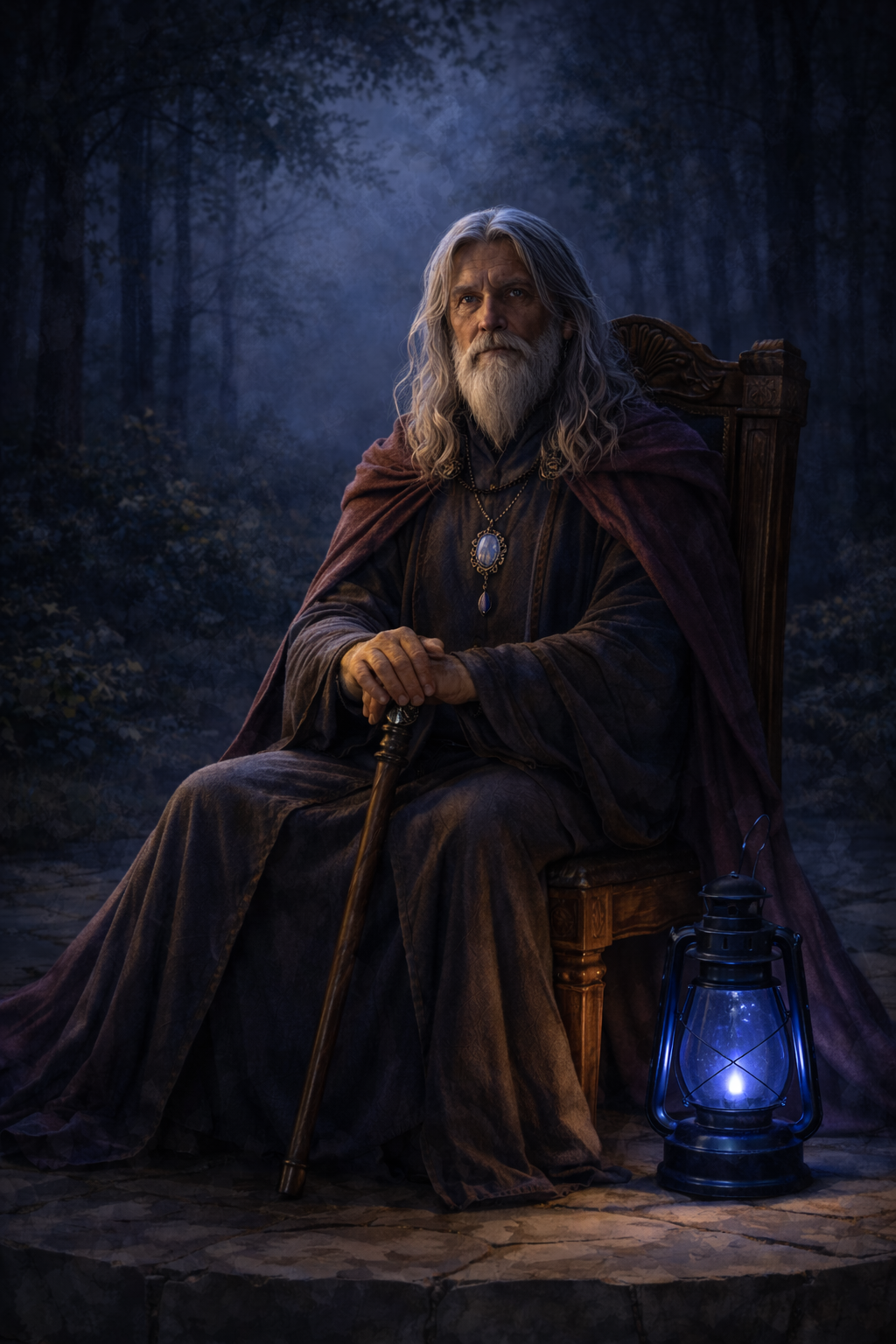
(Magos enters the conversation)
Magos often says that the most dangerous lie is the belief that we are late.
In the Kingdom of the Wounded Child, there is no clock hanging on the wall. No bell rings to announce readiness. Apprentices arrive when they arrive. Truth is spoken when it can finally be held.
Magos does not hurry the wounded. He waits with them.
This story follows that same rule.
Rushing a reckoning turns it into performance. Slowing down allows it to become recognition.
And recognition—real recognition—is what breaks cycles.
SECTION 3 — The Human Voice
You might expect a creator to explain a delay. To justify it. To apologize for it.
I won’t do that here.
This decision wasn’t about fear or uncertainty. It was about integrity. About listening to the same inner voice this book asks readers to trust.
For years, I confused urgency with importance. I don’t anymore.
Some work needs silence before it speaks. Some books need space before they are read.
The launch date has shifted. The intention has not.
(I invite you to click the image below to read the First Chapter)
SECTION 4 — Sofia’s Witness
Sofia understands waiting.
In the Castle of the Wounded Child, she is the one who opens doors—but never pushes anyone through them. She watches. She listens. She knows when a moment is ready.
She knows that truth spoken too early can wound again.
And so she stands at the edge of the garden, hands open, allowing timing to reveal itself.
This story carries her wisdom as much as Magos’ strength.

SECTION 5 — Closing Reflection
Delays are often framed as failure. I see them differently now.
I see them as moments of choice—between pressure and presence, between noise and meaning.
This book will arrive soon. And when it does, it will arrive whole.
Some things aren’t late.They arrive when they’re ready to be seen.
If you’d like to walk alongside this story as it prepares to step into the world, you can follow the journey here or join the Advanced Reader Circle.
(No urgency. No countdown.)